Small actions, deep roots
The heat finally broke. Not dramatically - just a loosening, something released. The garden, which had been holding its breath for days, seemed to exhale. The birds came back. Something had been tended back into being.
It is tempting, in weather like this, to feel that the world is too large and too hot for any of us to do much about. But I keep noticing - and I notice this especially in the work I do alongside researchers - that the most important things tend to happen small and in company. Someone sitting down to read a Wikipedia article about their field and asking, for the first time, who got left out of this? Someone adding a citation. Someone deciding that making knowledge visible is worth an afternoon.
This is where I want to start.
There are three things worth gathering as July begins, and they belong together even if they arrived separately.
The first is a new free course on the WikiLearn platform - Wikipedia for Researchers: Building Reliable Knowledge Through Citations - co-developed with Digital Science and Wikimedia Foundation colleagues, and grounded in a study we published last year on how researchers experience having their work cited on Wikipedia. It's a gentle, self-paced course that takes researchers from understanding Wikipedia's reliability ecosystem to making their first contribution. If you work with early-career researchers, teach, or support open knowledge communities, it's worth sharing.
The second is the thinking that gathered at the AI Bridges symposium in London in late May (just as the heat was starting to subside) - a gathering of people trying to make sense of what happens when AI systems draw on open knowledge infrastructure, and who decides. For those of us who care about what humanities scholarship does in the world, the conversation there was clarifying in ways that are still settling.
The third is Rachel Arteaga's essay Infrastructures of Repair in Public Humanities, which I keep returning to; and Trevor Owens' ongoing work on story, memory, and what he calls the after of disruption - not recovery exactly, but a different kind of orientation.
What runs through all three is a question about what we think we're doing when we tend to this work — and for whom.
Arteaga argues that the humanities are "a deeply social infrastructure of repair." She means infrastructure in the full, unglamorous sense: the slow, repetitious, time-intensive work of creating conditions in which people can encounter history, culture, and difference on their own terms. Owens, in a different register, keeps returning to the idea that story and memory are not decorative additions to institutional life but its actual substance. Kimmerer, in The Serviceberry, describes a gift economy grounded in reciprocity — what we put into the world is not lost but returned, transformed, through the communities that receive it. None of these are arguments for grand gestures. All of them are arguments for tending.
Wikipedia, understood this way, is a kind of commons garden — something that grows through the accumulated attention of people who notice what's missing and add what belongs there. Not for ownership, but for use. For the next person who arrives.
But it is also, quietly, an infrastructure of story — a place where a field's self-understanding accumulates, where some voices get cited and others don't, where what counts as an adequate representation of a body of knowledge is decided by editorial convention rather than disciplinary judgement. The problem isn't confidence; it's emphasis. A citation can be technically correct and still misrepresent what a field actually knows, or contests, or holds lightly. Interpretation is never fully legible — not across disciplines, not even within them — and Wikipedia's reliability framework, built around verifiable facts rather than interpretive framing, doesn't have a good answer to that. The AI Bridges symposium sharpened this for me: as AI systems increasingly draw on Wikipedia as a foundational knowledge source, those gaps in emphasis don't stay on the page. They travel.
The WikiLearn course is, in one sense, a practical resource. But the argument underneath it is a repair argument: that researchers who understand what Wikipedia is and how it works are better placed to contribute the interpretive labour that makes shared knowledge actually shared. That this is slow, repetitive, and not counted in any evaluation framework doesn't make it less important. It may make it more so.
Kimmerer writes that the stories we tell about the world are not given to us — they are chosen, and we are free to choose differently. The question the course puts to researchers is a small one — could you add a citation? — but it opens onto something larger: what kind of knowledge ecosystem do you want to help tend?
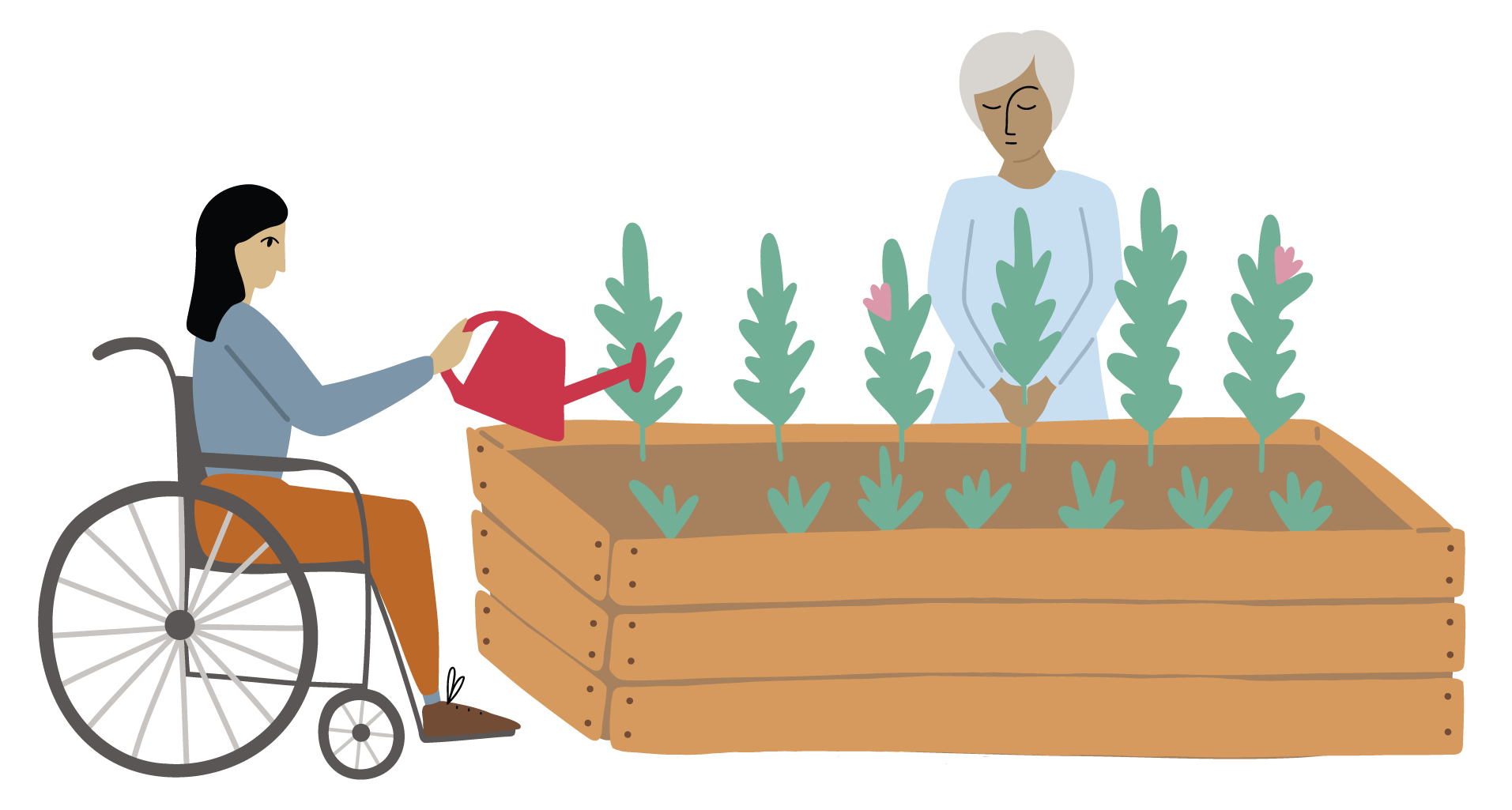
What kind of knowledge ecosystem do you want to help tend?
Illustration by Sophia van Hees, Brave Snail Designs
Where I live (Reading, UK) the 2026 Climate Festival took place from 6-20 June 2026. The warnings about El Niño that we’re now hearing about are not abstract. The rain is falling after the hottest May on record (in recorded memory, at least and now likely to be overtaken by June’s extreme heat stats) and still, the birds came back. Still, people are sitting down at their desks, perhaps noticing a gap in a Wikipedia article about their field, and adding a line, or a DOI. What goes in doesn't disappear. It becomes part of what the next reader finds, what the next AI system draws on, what the next researcher discovers when they go looking for themselves in the literature and find, this time, that someone had been there before them and left something.
That's not a small thing, dressed up as one. That's tending.
If you are working with researchers who might benefit from the course, or if the bigger systemic picture - AI, open knowledge infrastructure, and what humanities scholarship has to offer - is something you want to think through together, I'd welcome a conversation. Get in touch.
Further reading:
Rachel Arteaga, "Infrastructures of Repair," Public Humanities (Cambridge)
Trevor Owens, "Science as Story, Memory as Infrastructure," Scholarly Kitchen (parts one and two)
Robin Wall Kimmerer, The Serviceberry: Abundance and Reciprocity in the Natural World (video inspo)
Wikipedia for Researchers — free course on WikiLearn